Best Time to Visit Perito Moreno Glacier and Weather Guide
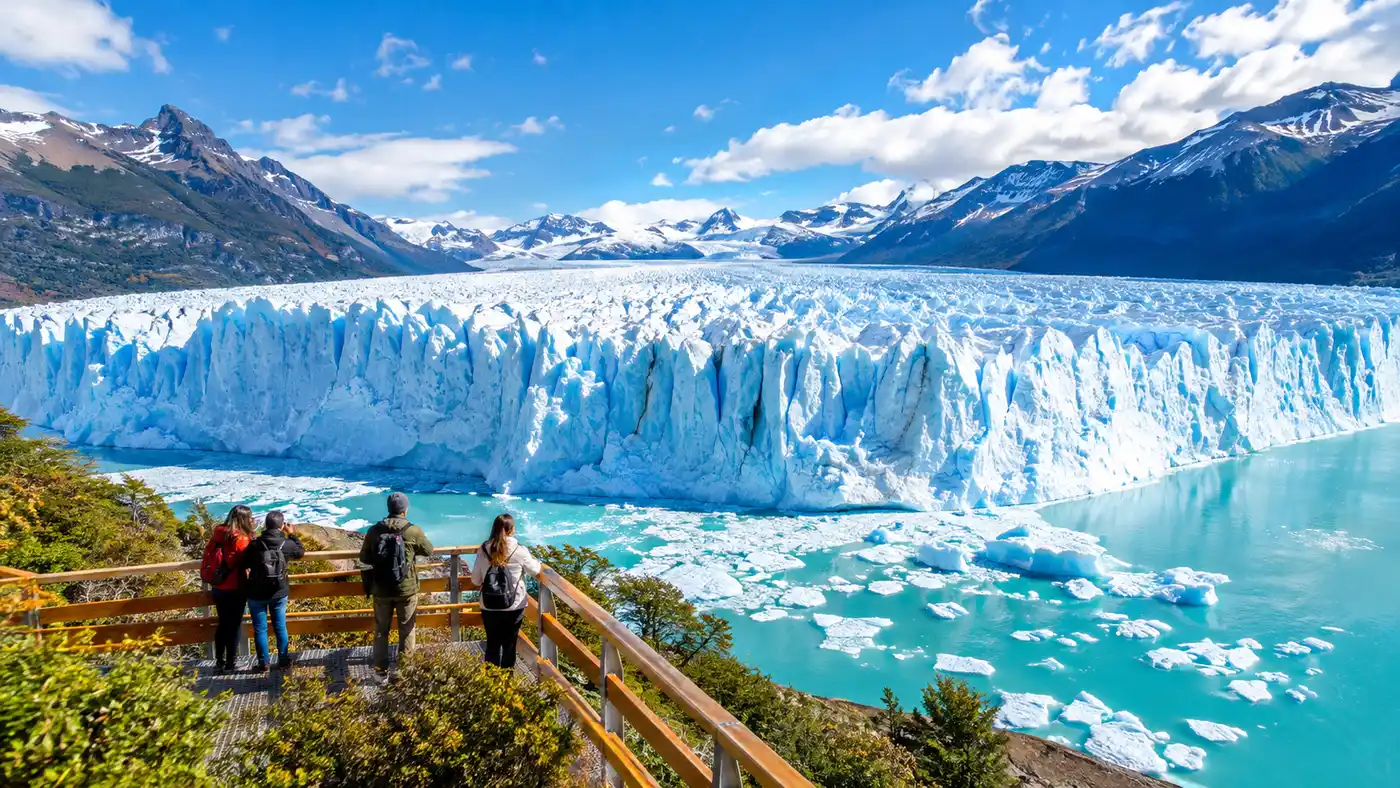
Standing on the lower wooden balcony at three in the afternoon, you can feel the cold radiating off the five-kilometer ice wall before you even reach the railing. It smells like damp stone and freezing rainwater. Choosing the best time to visit perito moreno glacier comes down to a simple trade off between braving howling southern winds in exchange for thundering ice calving, or taking crisp, quiet autumn days where you practically have the boardwalks to yourself.
Patagonia makes its own rules when it comes to the atmosphere. You can wake up in El Calafate under a blue sky, drive 78 kilometers west toward the Andes, and step directly into a sleet storm. Understanding the seasonal rhythms, the local microclimate, and the daily temperature swings will keep you warm, dry, and standing in the right spot when a massive block of ice shears off into Lake Argentino.
Book your perito moreno glacier tour experience:
Season by Season: Picking the Best Time of Year to Visit Perito Moreno Glacier
December through February is peak austral summer, and it shows. The sun stays up past ten at night. Temperatures hover between 13°C and 18°C on good days, although the icy microclimate near the front wall always knocks four or five degrees off whatever the forecast says back in town. If your primary goal is witnessing ice calving - when four-story chunks fracture and crash into the canal - this is the time. Glaciar perito moreno en verano experiences the highest daytime thermal stress, which makes the terminus unstable in the best possible way. The sheer noise of summer calving sounds like artillery going off in a canyon.
Summer brings busloads of tour groups. By 11:30 AM, the central walkways near the lower deck become crowded, and selfie sticks start swinging into your peripheral vision. The Patagonian wind also peaks during these months, whipping across Lake Argentino with sustained gusts reaching 60 kilometers per hour. For many travelers wondering about the mejor epoca para visitar el glaciar perito moreno, late summer wins purely for the long daylight and active ice movement, despite the tourist traffic.
March and April are my personal favorites. Autumn arrives fast in Santa Cruz province. The southern beech forests (lenga and ñire) along the mountainsides turn fiery shades of copper and deep orange, creating an absurd contrast against the electric blue ice. Glaciar perito moreno en marzo feels far more relaxed. Winds drop off significantly compared to January. Daily highs settle around 10°C to 12°C. You will need an extra fleece layer, but you can stand at the balconies for twenty uninterrupted minutes without someone bumping your tripod.
May marks the deep shoulder season when daylight shrinks fast. Rain increases, mornings dip below freezing, and several tour outfits pack up for the year. It has a moody, brooding atmosphere that landscape photographers love, though navigating wet or icy catwalks demands careful footing.
Winter runs from June through August. Visiting glaciar perito moreno en invierno is entirely possible, contrary to what many outdated travel forums claim. El Calafate stays open, the national park remains accessible via the paved Provincial Route 11, and the glacier keeps grinding forward. Daily highs hover around 3°C to 5°C, dropping down to -3°C at night. Visiting glaciar perito moreno en julio means quiet boardwalks, snow-dusted ridges, and almost zero wind. The glacier looks deeper blue under soft winter light. The big ice-trekking excursions shut down during mid-winter, so if strapping on crampons to walk across the seracs is on your bucket list, skip these months.
Spring covers September through November. September is cold and crisp, while November brings the first serious warm spells. Wildflowers start blooming along the road, and the days stretch out again. It is a smart shoulder window if you want decent weather without paying peak hotel rates in El Calafate, though November can be notoriously gusty.
Pro tip: Visit the balconies between 2:00 PM and 4:30 PM. The sun hits the western face directly, warming the outer seracs and causing far more dramatic calving events than you will see during cool morning hours.
Perito Moreno Glacier Weather by Month and Temperatures
Checking a standard weather forecast perito moreno glacier app can mislead you. Most weather apps pull data from El Calafate airport, which sits out on the dry Patagonian steppe near the eastern tip of Lake Argentino. The glacier sits tucked deep inside the Andean foothills where moist Pacific air masses collide with the mountains. The actual glaciar perito moreno weather is almost always wetter, windier, and colder than El Calafate.
The table below breaks down the typical monthly conditions at the glacier, giving you an honest baseline for planning your travel window.
| Month | Avg High | Avg Low | Wind Intensity | Crowd Level | Ice Treks Available |
|---|---|---|---|---|---|
| January | 17°C (63°F) | 8°C (46°F) | High | Peak | Yes |
| February | 16°C (61°F) | 7°C (45°F) | High | Peak | Yes |
| March | 13°C (55°F) | 5°C (41°F) | Moderate | Moderate | Yes |
| April | 10°C (50°F) | 2°C (36°F) | Low to Moderate | Low | Yes (until mid-month) |
| May | 6°C (43°F) | 0°C (32°F) | Low | Very Low | No |
| June | 4°C (39°F) | -2°C (28°F) | Low | Very Low | No |
| July | 3°C (37°F) | -3°C (27°F) | Low | Very Low | No |
| August | 5°C (41°F) | -2°C (28°F) | Moderate | Very Low | No |
| September | 9°C (48°F) | 1°C (34°F) | Moderate | Low | No |
| October | 12°C (54°F) | 3°C (37°F) | High | Moderate | Yes (starts mid-month) |
| November | 15°C (59°F) | 6°C (43°F) | Very High | Moderate-High | Yes |
| December | 16°C (61°F) | 7°C (45°F) | High | Peak | Yes |
When searching for glaciar perito moreno tiempo or checking meteo glacier perito moreno updates before heading out, pay attention to the wind speed rather than the precipitation icon. A light drizzle on a calm day is pleasant enough with a rain jacket. A 50 km/h wind at 6°C will freeze your fingers within three minutes if you take off your gloves to take photos.
Calving Season and the Elusive Rupture Event
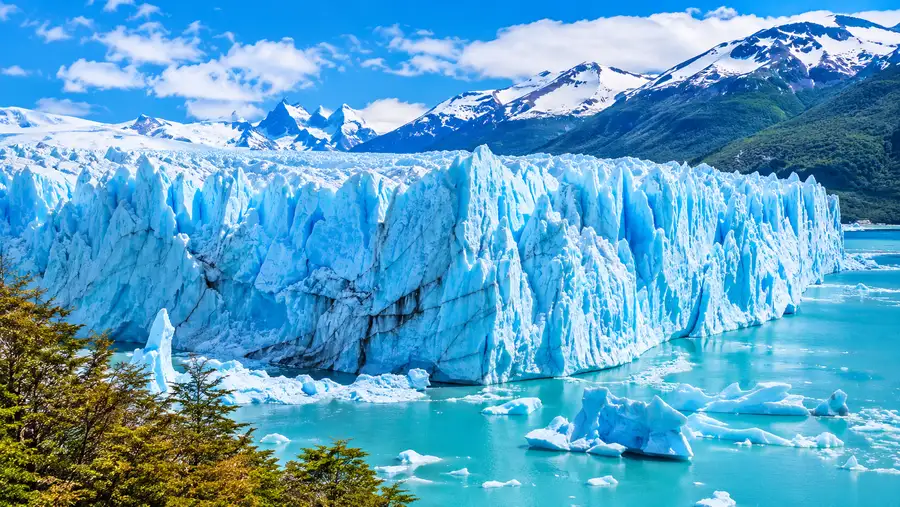
People often confuse normal calving with the cyclical rupture event. Calving happens all year round, every single day. Blocks the size of passenger vans peel off the terminus and splash into the water, producing waves that roll across the Brazo Rico. The rate peaks between December and March because higher ambient air temperatures warm the surface crevasses. The afternoon sun also warms the dark moraine debris caught in the ice, which speeds up internal melting.
The famous rupture is something different entirely. Perito Moreno advances forward until it physically collides with the Magallanes Peninsula across the canal. This creates a natural ice dam that cuts off Lake Argentino's southern branch. Water builds up on the Brazo Rico side, rising sometimes ten to twelve meters higher than the main lake. The immense water pressure slowly undercuts the ice barrier, carving an arch that eventually collapses under catastrophic weight.
Predicting a rupture is impossible. They have occurred in March, August, and November. Some cycles take two years, while other gaps lasted nearly two decades. Waiting around specifically to see a rupture is a fool's errand unless local park authorities announce that water has formed a bridge and the structure is visibly leaking. If you want guaranteed action, prioritize a warm afternoon in glaciar perito moreno en diciembre over chasing an unpredictable bridge collapse.
Book your perito moreno glacier tour experience:
Perito Moreno Glacier: What to Wear and Pack
How cold is perito moreno glacier on an average visit? Near the viewing platforms, the ambient air usually feels roughly 5°C colder than whatever the digital thermometer in your car reads. The lake water is just above freezing, and cold air cascades continuously down from the southern Patagonian ice field. If the wind picks up, the wind chill factor drops that feeling another five degrees.
The golden rule out here is zero cotton. Cotton traps sweat and damp air, turning you into a shivering mess once you stop walking. Dress in a deliberate three-tier system: a breathable synthetic or merino wool base, an insulating mid-layer like fleece or packable down, and a windproof, waterproof outer shell.
Note: Wooden and metal walkways around the glacier get slick from rain, morning frost, and blowing spray. Leave running sneakers with smooth soles at your hotel; rubber-lugged trail shoes or hiking boots are much safer.
When considering perito moreno glacier what to wear, keep your hands and face protected. You will stand stationary on the steel mesh balconies for long stretches waiting for ice to fall, and that is when the cold seeps in.
- Outer shell: a dedicated windproof and waterproof jacket with an adjustable hood that will not blow off your head in 50 km/h gusts.
- Gloves: wind-resistant softshell gloves with touchscreen fingertips so you do not need bare skin exposed while adjusting camera settings.
- Eye protection: polarized sunglasses, because the glare off hundreds of square kilometers of pure white ice will trigger brutal headaches on bright days.
- Footwear: sturdy waterproof hiking boots with grippy vibram soles to handle wet steps on the boardwalk trails.
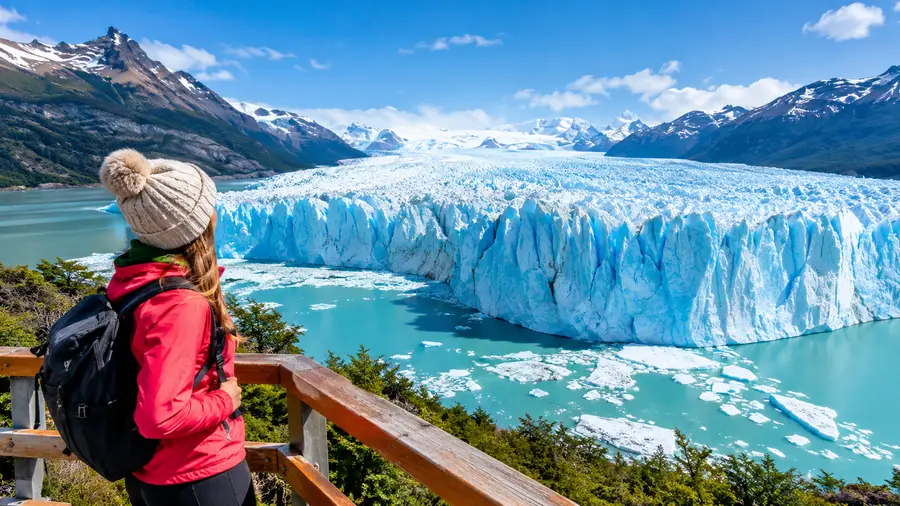
- Headwear: a snug beanie or fleece cap that covers your ears completely. Wide-brim safari hats simply blow away across the channel.
- Skin care: high-SPF sunblock and lip balm, because the thin southern ozone layer combined with ice reflection burns skin surprisingly fast.
Planning Your Daily Schedule: Timing the Balconies
The time of day you arrive alters your entire experience of the glacier. Most tourist agencies in El Calafate run full-day tours that follow an identical script: pickup between 8:30 AM and 9:00 AM, arrive at the park entrance around 10:15 AM, hit the catwalks until 1:00 PM, take a boat trip, and leave by 4:00 PM. This schedule concentrates almost every visitor onto the walkways during the exact same four-hour window.
If you rent a car or hire a private transfer, flip the script completely. Arriving at the park gate right when it opens at 8:00 AM gives you two hours of near-total silence. The morning light strikes the northern wall, casting long blue shadows across the seracs. It feels ancient, undisturbed, and deeply tranquil. You can hear the groaning and popping of the ice interior echoing off the opposing cliffs.
Mid-afternoon is when the spectacle happens. If you are booking an adventure like the ice trekking excursions, aim for a morning ice walk so your afternoon stays open for the viewing decks. Between 1:30 PM and 4:30 PM, the sun sits directly in front of the glacier face. The deep blue color intensifies. The warmth starts destabilizing front blocks, and massive calving bursts occur every fifteen to twenty minutes.
- Early morning (8:00 AM to 10:00 AM): minimal crowds, ideal northern light for wide photography, crisp freezing temperatures, low ice movement.
- Midday (11:00 AM to 1:30 PM): peak foot traffic on the central balconies, tour boats crisscrossing the canal, flat vertical lighting.
- Afternoon (2:00 PM to 5:00 PM): prime calving activity, warmer ambient air, excellent sun angle on the main terminal wall, tour crowds thinning out after 3:30 PM.
- Late evening (summer only): long golden shadows, park nearing closure, extremely peaceful setting for watching birds and wildlife near the shoreline.
Many travelers try to squeeze the glacier into a rushed half-day trip. That is a mistake. Weather changes by the hour in Los Glaciares National Park. A morning obscured by low gray cloud cover can clear into an afternoon of crystal-clear skies and falling ice. Give yourself at least five full hours on the walkways to experience both the silence and the drama.
Frequently Asked Questions about best time to visit perito moreno glacier
What is the absolute best month to visit Perito Moreno Glacier?
March is generally the sweet spot. You get moderate temperatures around 13°C, noticeably lighter winds than December or January, smaller crowds, and the lenga forests turning bright yellow and red. December and February are better if your top priority is watching massive ice calving under hot afternoon sun.
Can you visit Perito Moreno Glacier in the winter months?
Yes, the national park stays open year-round. Visiting in June, July, or August means freezing temperatures around 3°C, short daylight hours, and closed ice-trekking routes, but the park is remarkably quiet, wind-free, and scenic with snow-covered mountains framing the ice.
How cold does it actually get at the glacier balconies?
Even on warm 18°C summer days in town, expect the balconies right near the ice to feel like 10°C to 12°C, dropping lower whenever the southern breeze gusts off the frozen lake. In winter, daytime temperatures hover around 0°C to 4°C with bitter wind chills.
What time of day does the glacier calve the most?
Calving peaks in the mid-to-late afternoon, usually between 2:00 PM and 5:00 PM. The daily thermal buildup from the afternoon sun weakens surface tension in the ice, triggering massive structural collapses into Lake Argentino.
Quick Reference
- Peak calving: December to March, 2:00 PM - 5:00 PM
- Lowest winds and fall foliage: March through April
- Ice trekking operational window: roughly mid-October through mid-April
- Balcony microclimate: roughly 5°C colder than El Calafate forecasts
Book your perito moreno glacier tour experience:
My Take
If you have total flexibility over your calendar, fly down in mid-March. You skip the overwhelming holiday rush, avoid the worst of the brutal spring gales, and get to watch blue ice calving against a backdrop of golden Patagonian forest. If summer is your only window, just make sure to rent a car, pack three solid layers, and stay on the platforms past 3:00 PM when the tour buses roll back toward town. You will never forget the sound of that ice cracking.
Read more about perito moreno glacier tour.